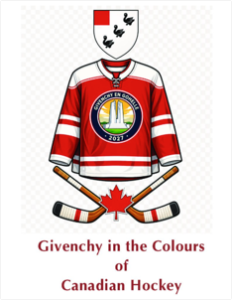
Hockey jerseys, known affectionately as “sweaters” in Canada, carry a rich heritage rooted in the nation’s deep love for the game. Their story begins in the late 19th century, when the sport first organized into leagues across Canada.
Early Origins
In the 1870s and 1880s, hockey players wore heavy woolen sweaters—hence the enduring term “sweater.” These garments were practical, providing warmth in cold, unheated arenas. Early teams distinguished themselves through simple horizontal stripes or basic colours, with wool being the fabric of choice despite its tendency to become heavy and waterlogged with sweat and ice.
The Emergence of Team Identity
As the game formalized with the founding of leagues like the National Hockey Association (1909) and eventually the National Hockey League (1917), jerseys became powerful symbols of team identity. The Montreal Canadiens, established in 1909, adopted their iconic red, white, and blue design with the interlocking “CH” logo—one of the most recognizable sweaters in sports history. The Toronto Maple Leafs followed with their distinctive maple leaf crest, cementing the connection between hockey and Canadian national symbols.
Evolution of Materials and Design
Through the mid-20th century, jerseys evolved from pure wool to durable cotton and nylon blends, reducing weight and improving comfort. Numbers were added to backs for player identification, and by the 1970s, names appeared above the numbers. The classic lace-up collar gradually disappeared, though it occasionally returns in nostalgic “throwback” designs.
The Team Canada Legacy
Perhaps no jersey resonates more deeply with Canadians than the national team sweater. The 1972 Summit Series against the Soviet Union produced an iconic red-and-white design, worn during Paul Henderson’s legendary series-winning goal. This moment forever linked the maple leaf jersey to Canadian pride and identity. Subsequent Olympic and international tournaments reinforced this bond, with red maple leaf sweaters becoming symbols of national unity.
Modern Innovations
The 1990s and 2000s brought significant technological advancement. In 2007, the NHL partnered with Reebok to introduce “Edge” jerseys, featuring moisture-wicking synthetic fabrics designed for improved performance and aerodynamics. Adidas took over production in 2017, and Fanatics assumed manufacturing duties in 2024, each iteration promising better fit, breathability, and durability.
Cultural Significance
Beyond the professional ranks, the hockey sweater holds profound cultural meaning in Canada. Roch Carrier’s beloved short story “The Hockey Sweater” (1979) captured this sentiment perfectly, telling of a young boy’s dismay at receiving a Toronto Maple Leafs sweater instead of his coveted Montreal Canadiens jersey. The tale became so iconic that a passage appears on the Canadian five-dollar bill.
Conclusion
From humble woolen beginnings to high-tech performance garments, Canadian hockey jerseys have evolved dramatically while retaining their essential role as symbols of team loyalty and national identity. Whether worn by NHL superstars or children in local rinks, these sweaters continue to embody the passion, tradition, and community spirit that define hockey in Canada. They remain far more than uniforms—they are cherished emblems of a nation’s enduring love affair with its game.
| In April 2027, the world will mark the 110th anniversary of the Battle of Vimy Ridge. The engagement widely regarded as a defining moment in the birth of Canadian national pride and awareness.The municipality of Givenchy-en-Gohelle, sitting in the shadow of the Canadian National Vimy Memorial, has never forgotten the sacrifices of our soldiers.For 2027, the municipality has conceived an ambitious commemorative project. Bay-Bloor Charities Inc. is helping Givenchy en Gohelle’s City Hall to organize the event in Canada. Please participate in the Rink to Ridge operation by loaning Givenchy en Gohelle one of your club’s jersey Click the Contact Link Below for further Information Contact in Canada: Secretary at Bay-Bloor Charities Inc. |
|---|