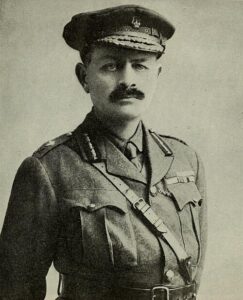
In the spring of 1917, the Canadian Corps achieved one of the most celebrated victories of the First World War at Vimy Ridge. The soldiers who accomplished this feat earned an enduring nickname: the “Byng Boys,” named after their commander, General Sir Julian Byng. The moniker was a play on a popular London theatrical revue of the era, “The Bing Boys Are Here,” and it captured the affection and pride Canadian troops held for their British-born leader.
Julian Byng took command of the Canadian Corps in May 1916. Though initially unfamiliar with Canadian sensibilities, he quickly earned respect through his approachable manner and genuine concern for his men’s welfare. Under his leadership, the four Canadian divisions would fight together for the first time as a unified corps—a defining moment in the nation’s military history.
Vimy Ridge presented a formidable challenge. The seven-kilometre escarpment in northern France dominated the surrounding plains and had been held by the Germans since 1914. Previous French and British assaults had failed catastrophically, costing tens of thousands of lives. The Germans had transformed the ridge into a fortress of trenches, tunnels, and concrete machine-gun emplacements.
Byng, working closely with Major-General Arthur Currie, prepared meticulously. Innovation defined their approach. Soldiers were briefed thoroughly on objectives using detailed maps and scale models of the battlefield, ensuring that even junior ranks understood the plan should their officers fall. This democratization of tactical knowledge was revolutionary. The Canadians rehearsed the assault repeatedly behind the lines, practising over ground marked with tape to replicate German positions.
The artillery preparation was equally sophisticated. A “creeping barrage” was devised, in which shellfire advanced in timed increments ahead of the infantry, forcing German defenders to keep their heads down while Canadian troops closed the distance. New counter-battery techniques, developed by Lieutenant-Colonel Andrew McNaughton, used sound-ranging and flash-spotting to locate and destroy enemy guns before the attack. An immense tunnel system, called subways, allowed troops to reach the front lines safely. At 5:30 a.m. on April 9, 1917—Easter Monday—the assault began amid sleet and snow. All four Canadian divisions advanced simultaneously behind the creeping barrage. The 1st, 2nd, and 3rd Divisions made rapid progress, seizing their objectives with remarkable precision. The 4th Division faced the toughest fighting at Hill 145, the highest point on the ridge, where fierce German resistance caused heavy casualties before the position finally fell.
By April 12, the entire ridge was in Canadian hands. The victory came at a cost of nearly 3,600 dead and over 7,000 wounded, but it represented a stunning achievement where others had failed. The Byng Boys had captured more ground, prisoners, and guns than any previous British offensive of the war.
The triumph at Vimy resonated far beyond its military significance. For many, it marked the birth of Canadian national identity—a moment when Canadians fought and won together as one. General Byng, promoted afterward, later served as Governor General of Canada, forever linked to the men who bore his name with pride.
| In April 2027, the world will mark the 110th anniversary of the Battle of Vimy Ridge. The engagement widely regarded as a defining moment in the birth of Canadian national pride and awareness.The municipality of Givenchy-en-Gohelle, sitting in the shadow of the Canadian National Vimy Memorial, has never forgotten the sacrifices of our soldiers.For 2027, the municipality has conceived an ambitious commemorative project. Bay-Bloor Charities Inc. is helping Givenchy en Gohelle’s City Hall to organize the event in Canada. Please participate in the Rink to Ridge operation by loaning Givenchy en Gohelle one of your club’s jersey Click the Contact Link Below for further Information Contact in Canada: Secretary at Bay-Bloor Charities Inc. |
|---|